

The Faculty of Biotechnology (ESB) of the Universidade Católica Portuguesa hosted, at the end of November, two international training events that brought together students and researchers from several European institutions, focusing on strengthening scientific, innovation, and communication skills. These initiatives, which actively involved researchers from the Centre for Biotechnology and Fine Chemistry (CBQF) and international partners, took place under the framework of the project CROSSPATHS.
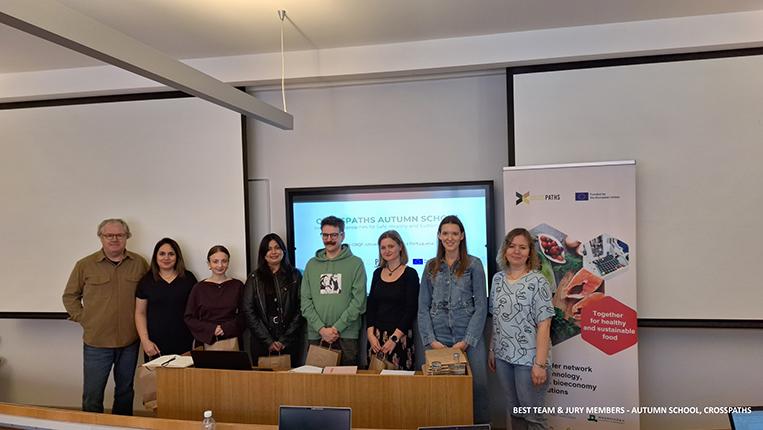
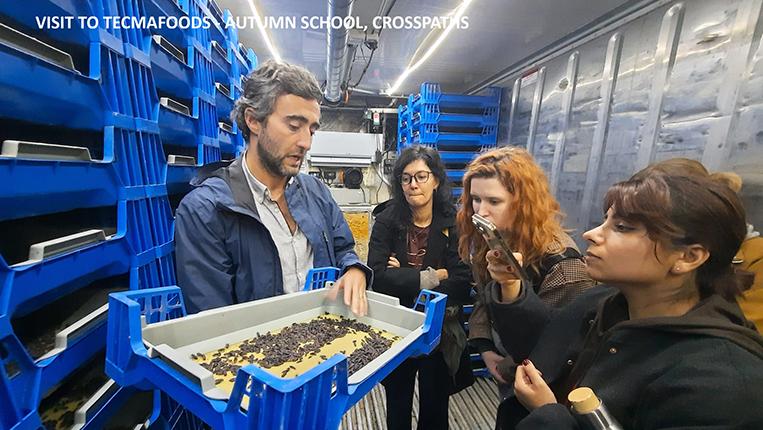
From 24 to 26 November, the CROSSPATHS Autumn School took place, bringing together students and researchers from CBQF/ESB-UCP, the Estonian University of Life Sciences (EMÜ), and the Institute of Animal Reproduction and Food Research of the Polish Academy of Sciences (InLife). Over three intensive days, participants worked in international teams on the Tecmafoods Case Challenge, exploring innovative and sustainable approaches in the food sector. The initiative combined practical sessions, workshops, and pitch development, fostering the application of scientific knowledge to real-world challenges, as well as strengthening collaboration, communication, and problem-solving skills.
For Mahsa Farrokhi, a PhD student at CBQF, “the Autumn School was an extremely valuable and productive experience. Collaborating with students and researchers from Estonia and Poland helped me gain new perspectives, build contacts, and strengthen my communication and problem-solving skills, especially during the pitch development.”
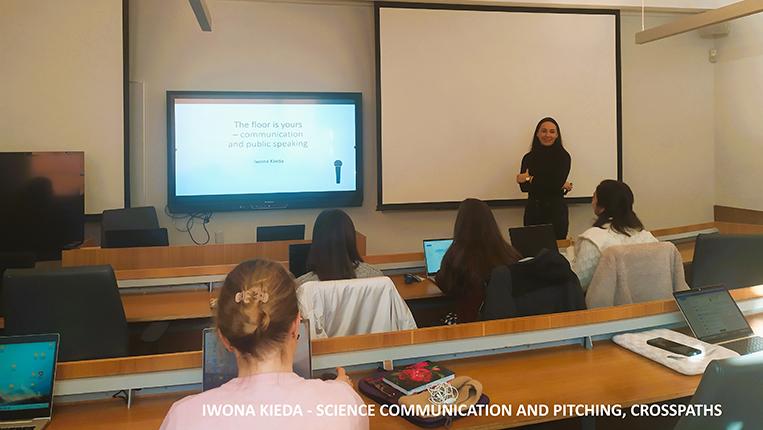
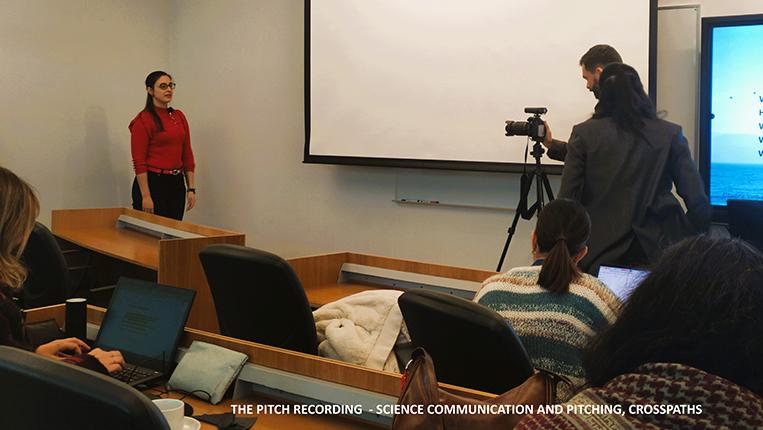
Continuing this training momentum, on 27 and 28 November, the Science Communication and Pitching Training Session took place, focusing on developing scientific communication skills, media training, and effective presentation of ideas. The training was led by Iwona Kieda, Head of Communication & International Affairs at InLife, and combined theoretical sessions with practical exercises, emphasizing self-presentation, adapting messages to different audiences, engaging with the media, and improving verbal and non-verbal communication.
Joana Cristina Barbosa, a researcher at CBQF, highlighted the direct impact of the training on her professional practice: “It was a very dynamic experience, with practical activities that truly challenged how I communicate science in my daily work. The pitch exercise was particularly enriching and helped me gain more confidence. I leave this training with new tools and a clearer understanding of aspects I can improve in scientific communication and public engagement.”
Together, the Autumn School and the Science Communication and Pitching Training Session represented a significant milestone for the CROSSPATHS project at the end of 2025, demonstrating its commitment to integrated researcher training, combining scientific innovation, international collaboration, and effective communication. Funded by the European Union Horizon Europe Programme, the project continues to establish itself as a strategic platform for enhancing transversal skills and bridging science, innovation, and society.